The Digital Blueprint For Tomorrow's Logistics Operations Is Being Written Now
22nd June 2026

Philip Jarrett, commercial director at Dakota Integrated Solutions, explores how advanced technology – ranging from high-end automated logistics to cutting-edge cloud computing software – is fundamentally reshaping operations; from major hardware upgrades to the integration of artificial intelligence.
For companies involved in the global supply chain, the main focus is about striving for the greatest efficiency, the highest margins and keeping up with the type of technological adoption that can elevate their organisation to the next level while steeling a march on the competition. For years, the industry was driven by standard operating procedures: visible barcode scanning, manual order picking and paper-based tracking sheets. Today, those paper-based systems are largely obsolete. The modern fulfilment arena demands speed, near-perfect accuracy and real-time connectivity from the back dock directly to the consumer’s front door.
The hardware evolution: Zebra’s TC701 and the shift to total RFID integration
At the ground level of this transformation is a relentless push toward automation, spearheaded by strategic technology partnerships. One of the most significant upcoming shifts involves the deployment of next-generation mobile computing hardware.
We have just secured our first strategic project in EMEA for a brand-new device from Zebra: the TC701. What makes this rollout particularly vital is its comprehensive integration of RFID technology. While traditional barcode scanning requires direct line-of-sight and physical manipulation of products, RFID infrastructure operates on an entirely different plane. By embedding RFID chips inside transit totes, logistics providers can automatically track inventory without a single manual scan.

Consider high-velocity shipping environments. Vehicles loaded with asset-tagged totes pass through gate readers installed directly on the loading dock doors. The system instantly inventories the vehicle, identifying exactly what, where and how items are moving in real time.
This enterprise hardware ecosystem is actively expanding through major partnerships. By standardising these intelligent frameworks, companies are drastically reducing the labour overhead traditionally spent handling physical inventory.
Re-engineering the voice interface: Honeywell’s BlueStreak and ‘Pick Up and Go’
While moving boxes relies on robust hardware, the human element within the warehouse still dictates fulfilment speed. Voice-directed picking has long been championed as the gold standard for boosting productivity. However, for those companies who hire additional resources during peak periods, this can create an operational bottleneck.
Historically, onboarding a new worker required a 10-to-15-minute training session where the software learned the picker's voice profile, accent and the ambient noise of the warehouse. In peak seasons, when operations must rapidly scale to support thousands of temporary workers, this training overhead could become an expensive deployment constraint.
To address this friction point, hardware and software providers have introduced massive upgrades to their voice communication systems. A primary driver of this evolution is the introduction of BlueStreak software from Honeywell, integrated directly into enterprise headsets to create an ecosystem known as ‘Pick Up and Go’.
BlueStreak is a speaker-dependent voice recogniser. Each speaker has his or her own templates and must train those templates. Each user is required to undergo enrolment training on templates. The recogniser compares the words spoken with the trained words to determine what was said. Adaptive speech recognition updates the user's templates to account for changes in speaking patterns. Update training can be used for a template if there are recognition errors.
The difference between a voice-trained application and a ‘Pick Up and Go’ platform is considerable. Instead of relying on a pre-recorded biometric blueprint, the system uses highly advanced processing to instantly decipher intent, accents and local dialects on the fly. Because the system utilises simple, lightweight operational vocabulary (such as ‘yes’, ‘no’ and numerical counts), advanced algorithms eliminate the need for pre-training entirely.
For seasonal businesses handling cosmetic or high-end gift peaks, this change saves hundreds of operational hours on day one. Temporary employees simply grab a headset, log in and begin picking instantly.

AI at the edge: De-skilling complex palette fulfilments
Beyond simple voice commands, the broader logistics industry is looking directly at AI to solve its most complex operational challenges. While some programming circles treat AI as a shorthand tool for rapid software development, its true potential lies in the optimisation of physical assets.
A prime example is found in specialised heavy manufacturing, such as the large, heavy, multi-diverse sizes and dimensions. Building complex product palettes is a highly specialised craft; workers must account for varying sizes, weights, heights, orientations and strict loading sequences to ensure transit stability.
Historically, this complex workflow lived entirely as intellectual property inside the heads of veteran warehouse pickers. As that workforce approaches retirement, companies face the acute threat of losing that operational knowledge.
AI can de-skill these highly complex operations:
- Data Assimilation: The AI engine ingests dimension, weight, and volume metrics directly from the enterprise ERP database.
- Optimal Pathing: The algorithm maps the warehouse layout, calculating ideal travel sequences to eliminate back-and-forth foot traffic.
- Dynamic Instruction: Instructions are sent straight to the picker’s headset via a specialised AI client within the enterprise platform.
This workflow turns a rookie picker into an expert overnight. The software handles spatial planning in the cloud, guiding the picker along the most efficient path and detailing exactly how to construct a safe, structurally stable palette.
The macro environment: Chip shortages and global pressures
No digital transition occurs in a vacuum, and the current macro-economic climate introduces severe headwinds for technology rollouts. The relentless expansion of massive data centres has consumed the lion's share of global memory and processor manufacturing capacity.
This surge in demand has triggered severe enterprise hardware shortages, driving equipment costs steadily upward. Most major vendors have implemented consecutive price increases making long-term infrastructure planning a challenging balancing act.
Concurrently, geopolitical friction points and energy volatility continue to disrupt basic raw materials. Even the production of industrial packaging and adhesive shipping labels faces supply-chain crunches linked to fluctuating oil markets. Because an automated warehouse cannot function without clear barcodes, tracking down reliable supply channels for label stocks remains a critical priority for logistics managers.
Labels tend to be the start of any product journey and without this vital piece of information contained within a barcode or an RFID chip embedded within a label, the mission-critical status of any efficient operation would be seriously hindered. This is why this simple requirement, if overlooked, could become the cause of a complexed problem. As a major supplier of labels, Dakota Integrated Solutions takes this vital requirement extremely seriously, and our in-house expertise enables us to navigate the complexity associated with this operational need.
"No digital transition occurs in a vacuum, and the current macro-economic climate introduces severe headwinds for technology rollouts."
Philip Jarrett, Commercial Director,
Dakota Integrated Solutions
Hardening the perimeter: Edge security and single sign-on
As warehouses fill up with intelligent, connected edge devices, cybersecurity has fast become a core operational metric. Every handheld scanner, smart headset and automated forklift represents a potential entry point into sensitive corporate networks.
To mitigate these risks without slowing down fast-moving pickers, companies are widely deploying specialised Mobile Device Management (MDM) platforms. These tools strictly lock down enterprise devices, preventing workers from accessing external applications or browsing unauthorised networks.
To streamline this protection layer, logistics firms are turning to single sign-on (SSO) ecosystems engineered by security experts within this field. By combining quick alphanumeric passcodes with facial recognition or biometric scanning, these tools unlock devices in seconds.
Crucially, this access model is dynamically tailored to the user's specific role. A worker stationed on a packing line is presented only with the specific application screens required for their shift, completely isolating the rest of the corporate architecture. This protocol ensures complete, audited data governance – a non-negotiable standard required to win major enterprise contracts across the pharmaceutical, grocery, and public healthcare sectors.
Dakota Integrated Solutions has an established partnership with the world leading organisation within this field. This partnership brings fast, secure user authentication – including single sign-on and badge-tap access – to Dakota’s customers operating in shared-device environments within the healthcare and supply chain industries.
The adoption of AMRs and automation
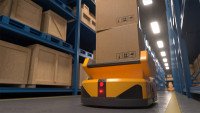
We also recognise that the adoption of autonomous mobile robots (AMRs) and automation within our focused sectors is accelerating. Retail analysts say the incentive for companies to invest in automation has become stronger as they seek to offset rising employment costs, including increases in National Insurance contributions and the National Living Wage introduced last April. A recent survey of 382 retailers, manufacturers and logistics firms in the UK by Savills, published in February, found that more than half planned to invest in artificial intelligence and warehouse robotics and automation over the next three years and that is why Dakota is now partnering with a large global provider of this technology.
A single, cohesive ecosystem
The modern supply chain is no longer just about moving physical goods; it is fundamentally about managing real-time data. Success goes to the operations that can successfully integrate smart enterprise hardware, adaptive voice software and bulletproof edge security into a single, cohesive ecosystem. While macroeconomic pressures and component shortages will continue to test the industry, the digital path forward remains clear.